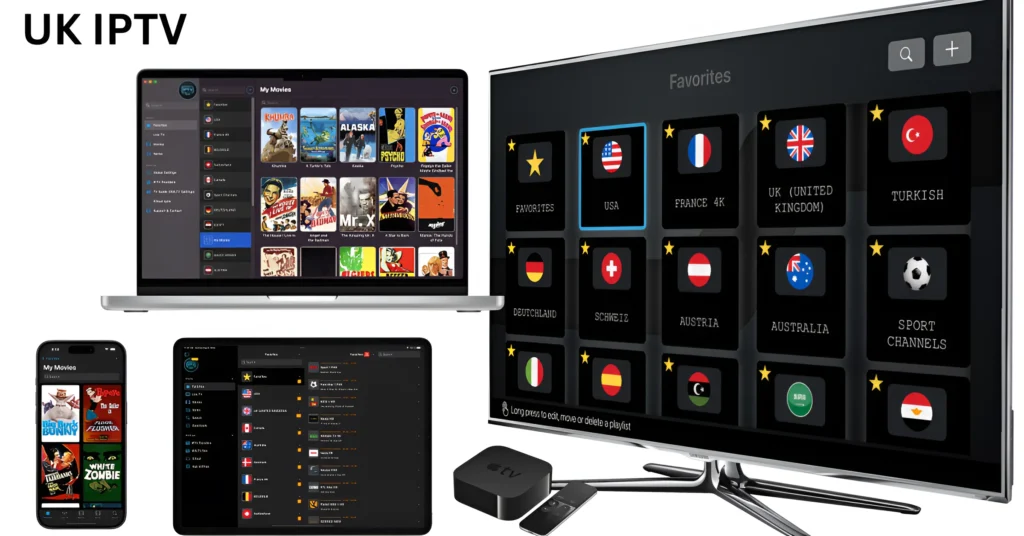
Introduction to IPTV on Smart TVs
The way people watch television has changed as a result of IPTV (Internet Protocol Television). Instead of relying on traditional cable or satellite services, Best IPTV Settings for Streaming allows users to stream live TV channels, movies, and series directly through an internet connection. Smart TVs enhance this experience even further by supporting dedicated IPTV apps that deliver high-quality content without the need for external devices.
However, many users experience buffering, freezing, and lag while using IPTV UK on Smart TVs. These problems are rarely caused by the IPTV service alone. In most cases, improper settings, slow internet configuration, or incorrect app optimization lead to poor performance. By applying the best IPTV settings, you can achieve smooth, high-quality streaming without interruptions.
Optimizing IPTV on a Smart TV improves:
Streaming speed
Picture quality
Channel loading time
EPG accuracy
Overall viewing experience
This guide explains the best IPTV settings to eliminate buffering and ensure seamless playback.
Smart TV Compatibility with IPTV Services
Before configuring IPTV settings, it is important to ensure your Smart TV supports IPTV apps.
Popular Smart TV Brands That Support IPTV
Most modern Smart TVs are fully compatible with IPTV, including:
Samsung Smart TVs (Tizen OS)
LG Smart TVs (WebOS)
Android TVs (Sony, TCL, Hisense)
Fire TV built-in televisions
Android TVs provide the most flexibility because they allow installation of multiple IPTV apps and external media players.
IPTV App Options for Smart TVs
Choosing the right IPTV app is critical for smooth streaming. The most popular IPTV apps include:
IPTV Smarters Pro
TiviMate (Android TV only)
Flix IPTV
Duplex IPTV
TiviMate is widely considered the best option for Android TV due to its advanced buffering control and external player support.
Internet Requirements for Buffer-Free IPTV
Your internet connection is the most important factor in British iptv performance.
Minimum Internet Speed for IPTV Streaming
To avoid buffering, your internet speed should meet the following requirements:
SD streaming: 10 Mbps
HD streaming: 20 Mbps
Full HD streaming: 30 Mbps
4K streaming: 50+ Mbps
If multiple devices are connected to the same network, higher speeds are recommended.
Wired vs Wireless Connection
A wired Ethernet connection is always better than Wi-Fi for IPTV because:
It provides stable bandwidth
It reduces packet loss
It minimizes latency
Wi-Fi can still work well if:
The router is close to the TV
You use a 5 GHz network
There is minimal interference
Reducing Network Congestion
Network congestion can cause buffering even with fast internet. To optimize bandwidth:
Pause background downloads
Limit other devices using high data
Enable QoS (Quality of Service) on your router
Assign priority to your Smart TV
These steps ensure UK IPTV receives consistent bandwidth.
Best IPTV App Settings for Smart TVs
Proper app configuration significantly improves streaming performance.
Buffer Size Configuration
Buffer size determines how much data the app preloads before playing a stream.
Recommended settings:
Live TV: Small or medium buffer (2–5 seconds)
Movies/VOD: Medium to large buffer (5–10 seconds)
A larger buffer reduces buffering but increases channel loading time. For live sports, a smaller buffer reduces delay.
Video Player Selection
Many IPTV apps allow you to choose between:
Built-in player
External player
External players like VLC or MX Player often provide better decoding and smoother playback.
Hardware vs Software Decoding
Always enable hardware decoding if your TV supports it because it:
Reduces CPU usage
Improves video smoothness
Prevents overheating
Software decoding should only be used if hardware decoding causes playback errors.
Auto Frame Rate Settings
Matching the stream frame rate with your TV refresh rate eliminates motion stutter. Enable auto frame rate switching if your IPTV app supports it.
EPG (Electronic Program Guide) Optimization
The EPG enhances the cheap iptv subscription experience by displaying program schedules.
To optimize EPG:
Use a correct and updated EPG URL
Set auto-update to every 6–12 hours
Ensure the correct time zone is selected
Incorrect EPG settings can cause missing or misaligned program data.
Picture Quality Optimization
Optimizing picture settings on your Smart TV improves IPTV viewing quality.
Choosing the Right Streaming Resolution
Most IPTV apps allow automatic resolution selection. However:
Use Auto for stable high-speed internet
Set manual resolution (720p or 1080p) for slower connections
Lower resolution reduces buffering.
Smart TV Picture Settings for IPTV
For the best picture:
Reduce sharpness to avoid artificial edges
Set motion smoothing to low or off for sports
Adjust brightness and contrast based on room lighting
Enable HDR only if the stream supports it
These settings provide natural and smooth visuals.
DNS Settings for Faster Streaming
Changing DNS can improve IPTV packages loading speed.
Recommended DNS servers:
Google DNS: 8.8.8.8 / 8.8.4.4
Cloudflare DNS: 1.1.1.1 / 1.0.0.1
Benefits of custom DNS:
Faster channel loading
Reduced buffering
Improved server response time
DNS can be configured in your router or Smart TV network settings.
VPN Settings for IPTV on Smart TVs
A VPN can enhance IPTV subscribe performance in some cases.
When to Use a VPN
Use a VPN if:
Your ISP throttles streaming traffic
You experience speed drops during peak hours
You need access to geo-restricted content
Best VPN Configuration Tips
For smooth IPTV streaming:
Choose a server close to your location
Avoid overloaded VPN servers
Use high-speed protocols like WireGuard
However, a VPN may reduce speed if not properly configured.
Fixing Common IPTV Problems on Smart TVs
How to Stop Buffering Issues
If buffering occurs:
Restart your router and TV
Clear the IPTV app cache
Reduce streaming resolution
Switch to an external player
Fixing Channel Freezing
Channel freezing can be resolved by:
Checking IPTV server stability
Updating the IPTV app
Switching decoder settings
Audio and Video Sync Problems
To fix sync issues:
Adjust audio delay in the player
Change from hardware to software decoding
Smart TV Storage and Performance Tips
Smart TVs have limited storage and RAM. To maintain performance:
Remove unused apps
Clear cache regularly
Keep firmware updated
This ensures IPTV apps run smoothly without lag.
Best Settings for Live Sports Streaming
Live sports require low latency and smooth motion.
Recommended settings:
Small buffer size
Auto frame rate enabled
Hardware decoding on
Ethernet connection preferred
These settings reduce delay and provide real-time viewing.
IPTV Playlist Optimization for Faster Loading
Your IPTV playlist plays a major role in performance. Large playlists with thousands of channels can slow down your Smart TV.
Use a Clean and Organized Playlist
Many IPTV providers include:
International channels
Duplicate channels
Unused categories
Loading all of them consumes memory and increases app load time.
Best practice:
Remove unwanted categories
Keep only the channels you watch
Use a favorites list
This reduces RAM usage and speeds up navigation.
M3U URL vs Xtream Codes
Most IPTV services provide two login methods:
M3U URL
Easy to use
Slower loading
Limited EPG control
Xtream Codes API
Faster channel loading
Better EPG integration
Improved VOD organization
For Smart TVs, Xtream Codes is usually the better choice.
Choosing the Best Streaming Protocol
Best sports IPTV streams use different protocols. Selecting the right one can eliminate buffering.
HLS vs MPEG-TS
HLS (HTTP Live Streaming)
More stable on slower networks
Slightly higher delay
Better for Wi-Fi connections
MPEG-TS
Faster channel switching
Lower latency
Requires stable internet
If you watch live sports, MPEG-TS is ideal. For general viewing on Wi-Fi, HLS is more reliable.
Advanced Video Player Settings
Fine-tuning your video player can significantly improve IPTV uk fhd playback.
Frame Rate Matching
Enable frame rate matching to:
Eliminate motion judder
Improve sports streaming
Provide cinema-like playback
Audio Passthrough
If you use a soundbar or home theater:
Enable audio passthrough
Select Dolby Digital when available
This improves audio quality and synchronization.
Deinterlacing Settings
Some live TV channels are interlaced. Enabling deinterlacing:
Removes flickering lines
Improves picture smoothness
Enhances sports channels
Set deinterlacing to “Auto” for best results.
Smart TV System-Level Optimization
Your Smart TV settings affect 4k iptv subscription uk performance more than you might think.
Disable Background Apps
Background apps consume RAM and bandwidth. Close unused apps to:
Free memory
Improve IPTV responsiveness
Reduce overheating
Turn Off Automatic Updates During Streaming
System updates can start downloading in the background and cause buffering. Schedule updates during idle hours.
Set TV to Performance Mode (If Available)
Some Android TVs offer performance or game mode. This:
Reduces processing delay
Improves app responsiveness
Enhances streaming smoothness
Router Optimization for IPTV
Your router is the backbone of IPTV streaming.
Enable Quality of Service (QoS)
QoS allows you to prioritize fhd iptv uk traffic over other devices.
Steps:
Open router settings
Enable QoS
Assign high priority to your Smart TV
This ensures uninterrupted streaming even when other devices are active.
Use 5 GHz Wi-Fi Instead of 2.4 GHz
5 GHz provides:
Higher speed
Lower interference
Better streaming quality
However, it works best when the TV is close to the router.
Restart Router Regularly
Restarting your router once a week:
Clears cache
Refreshes connections
Improves speed stability
Best IPTV Settings for Streaming
4K IPTV requires precise configuration.
Recommended Settings for 4K Playback
Internet speed: 50–100 Mbps
Wired Ethernet connection
Hardware decoding enabled
Large buffer size (10 seconds)
HEVC (H.265) support
Without HEVC support, 4K streams may stutter or fail to load.
Reducing IPTV Latency for Live TV
The temporal lag between your screen and the live broadcast is known as latency.
How to Reduce Delay
Use MPEG-TS protocol
Select low buffer size
Connect via Ethernet
Choose the closest IPTV server region
This is particularly crucial for live news and sports.
IPTV App Cache and Data Management
Over time, IPTV apps store temporary files that slow performance.
Clear Cache Regularly
Clearing cache:
Fixes app crashes
Improves channel loading
Frees storage space
Do this every 1–2 weeks for optimal performance.
Reinstall the App Periodically
If the app becomes slow:
Uninstall it
Restart the TV
Install the latest version
This removes corrupted data and improves stability.
Security and Stability Settings
Stable IPTV streaming also depends on security and network protection.
Avoid Overloaded Servers
If a channel buffers frequently:
Switch to another server line (if available)
Try a different stream format
Server congestion is a common cause of buffering.
Use a Secure DNS
Secure DNS prevents ISP throttling and improves response time.
Recommended:
Cloudflare DNS
Google DNS
Best Default Best IPTV Settings for Streaming for Smart TVs
Here is a recommended universal configuration:
Login method: Xtream Codes
Protocol: HLS for Wi-Fi, MPEG-TS for Ethernet
Buffer size: Medium (5 seconds)
Decoder: Hardware
Frame rate matching: Enabled
EPG auto-update: Every 6 hours
Connection: Ethernet preferred
These settings work well for most Smart TVs and IPTV UK services.
Troubleshooting Advanced IPTV Issues
Channels Not Loading
Possible fixes:
Check internet speed
Reload playlist
Update EPG
Restart the app
Black Screen with Audio
Solution:
Change decoder to software
Switch video player
App Crashing Frequently
Fix by:
Clearing cache
Updating firmware
Reinstalling the app
Future of Best IPTV Settings for Streaming on Smart TVs
Premium IPTV technology continues to evolve. Upcoming features include:
AI-based adaptive streaming
AV1 codec support for better compression
Cloud DVR integration
Faster channel zapping
Improved EPG interfaces
Smart TVs with more RAM and faster processors will handle IPTV even more efficiently in the coming years.
Conclusion: Best IPTV Settings for Streaming
Smooth IPTV reseller streaming on Smart TVs is not just about having fast internet—it’s about smart configuration. By optimizing playlists, selecting the right protocol, enabling hardware decoding, prioritizing IPTV traffic on your router, and maintaining your Smart TV system, you can achieve a flawless viewing experience.
Advanced tuning such as frame rate matching, HEVC support for 4K, and proper cache management ensures long-term stability. With the right setup, IPTV subscription uk can deliver cable-like reliability with superior flexibility and performance.
FAQs: Best IPTV Settings for Streaming
1. What is the best buffer size for IPTV on Smart TVs?
A medium buffer size (around 5 seconds) works best for most users. Use a larger buffer for VOD and a smaller buffer for live sports.
2. Is Ethernet better than Wi-Fi for IPTV?
Yes, Ethernet provides a more stable connection with lower latency and fewer buffering issues.
3. Which IPTV login method is faster?
Xtream Codes is faster and offers better EPG and VOD organization compared to M3U playlists.
4. Even with fast internet, why does IPTV buffer?
Buffering can occur due to server congestion, incorrect decoder settings, Wi-Fi interference, or background apps consuming bandwidth.
5. Do I need a VPN for IPTV on Smart TVs?
A VPN is only necessary if your ISP throttles streaming or you need access to geo-restricted content. Otherwise, it may reduce speed if not properly configured.