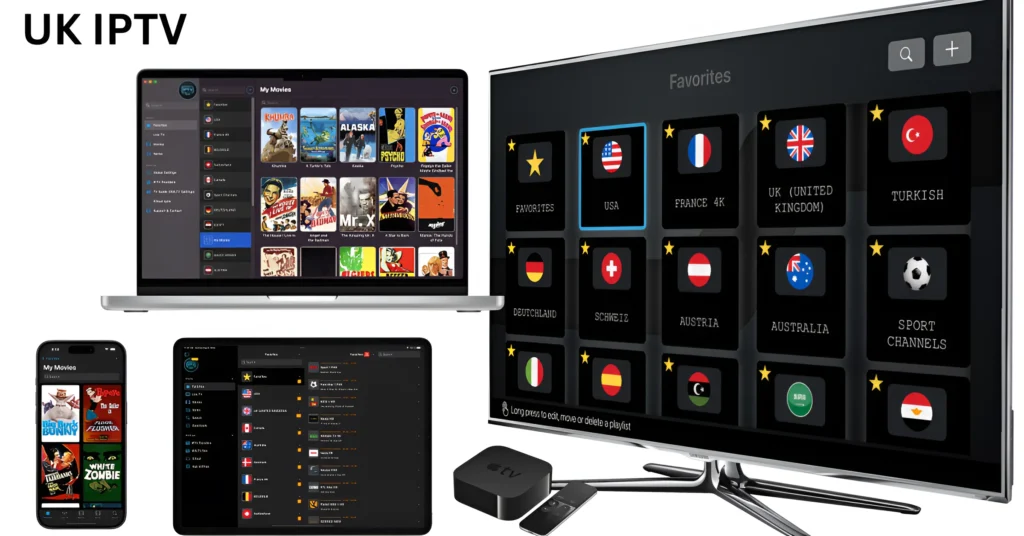
Introduction to IPTV Without Buffering in the UK
Let’s be honest—nothing ruins movie night faster than that spinning buffering circle. You’re ready to watch the big match or your favorite series, and suddenly the screen freezes like it’s stuck in time. Frustrating, right? If you’re using IPTV Without Buffering in the UK, smooth streaming isn’t a luxury—it’s the expectation.
IPTV UK has revolutionized the way people watch TV. No satellite dish, no cable clutter—just internet-powered entertainment. But with that convenience comes one major challenge: buffering. The good news? Buffering isn’t random. It happens for specific reasons, and once you understand them, you can fix most issues quickly.
In this guide, we’re breaking down what really matters for buffer-free IPTV in the UK. No fluff, no complicated jargon—just practical advice you can actually use.
What Is IPTV and How Does It Work
IPTV stands for Internet Protocol Television. Instead of receiving TV signals through traditional cable or satellite, IPTV delivers content over your internet connection.
Consider it similar to Netflix streaming, but with live TV, sports, movies, and on-demand programming. Your device connects to IPTV servers, which send video data in real time.
That means your viewing quality depends heavily on:
Your internet speed
Server quality
Device performance
Network stability
If any of these fail, buffering appears.
Why Buffering Happens in IPTV
Buffering is basically your device waiting for more data. Imagine trying to drink from a straw while someone keeps squeezing it—that’s what slow data flow feels like.
Common reasons include:
Slow broadband
Overloaded IPTV servers
Weak Wi-Fi signals
Outdated devices
Peak-time congestion
Understanding these factors is the first step toward fixing them.
Importance of Smooth Streaming for UK Viewers
UK IPTV is widely used for:
Live sports (especially football)
International channels
Movies and series
4K entertainment
Live sports demand real-time streaming. Even a few seconds of buffering can make you miss a goal. That’s why UK users need a setup designed for stability—not just speed.
Understanding the Main Causes of IPTV Buffering
Slow Internet Speeds
Speed is the foundation. If your connection can’t handle the data, buffering is unavoidable.
Recommended speeds:
SD streaming: 10 Mbps
HD streaming: 20 Mbps
4K streaming: 25–50 Mbps
Anything below this, and you’re likely to experience interruptions.
Network Congestion During Peak Hours
Ever noticed buffering gets worse in the evening? That’s because everyone in your area is online—streaming, gaming, downloading.
This is called peak-time congestion. Even if your internet plan is fast, shared network load can slow things down.
Low-Quality IPTV Servers
Not all IPTV providers are equal. Some use overloaded servers that can’t handle too many users at once.
High-quality providers use:
Load balancing
Multiple servers
Anti-freeze technology
These reduce buffering significantly.
Poor Device Performance
Your streaming device matters more than you think. A low-RAM Smart TV trying to decode HD streams is like asking a bicycle to tow a truck.
Devices with better processors and at least 2GB RAM perform much more smoothly.
Wi-Fi Signal Interference
Wi-Fi is convenient, but it’s not always stable. Walls, other devices, and distance from the router can weaken the signal.
Weak Wi-Fi = slow data transfer = buffering.
Minimum Internet Requirements for Buffer-Free IPTV
Recommended Speed for SD, HD, and 4K
Let’s keep it simple:
| Quality | Minimum Speed | Recommended |
|---|---|---|
| SD | 10 Mbps | 15 Mbps |
| HD | 20 Mbps | 30 Mbps |
| 4K | 25 Mbps | 50+ Mbps |
If multiple people stream at once, you’ll need even more bandwidth.
Upload vs Download Speed Explained
Most people focus only on download speed, but upload speed also affects stability—especially for live streams and interactive features.
A balanced connection ensures smoother playback.
Latency and Ping: Why They Matter
Latency measures how quickly data travels from server to device. Lower ping means faster response and fewer interruptions.
For IPTV services:
Ideal ping: under 20 ms
Acceptable: under 50 ms
Higher latency can cause freezing even with good speeds.
Best Broadband Types for IPTV in the UK
For the best experience, fibre broadband is the top choice. It offers:
Higher speeds
Lower latency
Better stability
Full-fibre (FTTP) is ideal for 4K IPTV streaming.
Choosing the Right IPTV Without Buffering in UK
Importance of High-Performance Servers
A strong server network ensures smooth streaming even during peak hours. Look for providers that offer:
High uptime
Fast channel loading
Minimal downtime
Load Balancing and Anti-Freeze Technology
These features distribute users across multiple servers, preventing overload.
Think of it like opening more checkout lanes in a supermarket—everything moves faster.
UK-Based vs Overseas IPTV Servers
Servers closer to your location reduce latency. UK-based servers often provide faster channel loading and fewer interruptions for UK viewers.
Trial Options to Test Stability
Always test before committing. A trial allows you to:
Check buffering levels
Test during peak hours
Evaluate channel quality
This is the safest way to choose a reliable service.
Best Devices for IPTV Without Buffering in UK
Firestick and Fire TV Performance
Amazon Firestick is popular for a reason. It’s affordable, fast, and supports most IPTV apps.
The 4K version performs significantly better than the standard model.
Android TV Boxes vs Smart TVs
Smart TVs often have limited processing power. Android TV boxes usually offer:
More RAM
Faster CPUs
Better app support
This results in smoother playback.
MAG Boxes for Dedicated IPTV Users
MAG boxes are built specifically for best sports IPTV. They provide:
Fast channel switching
Stable performance
Simple interface
Great for users who want a plug-and-play solution.
Device RAM and Processor Requirements
Minimum recommended specs:
2GB RAM for HD
4GB RAM for 4K
Quad-core processor or better
Anything lower may struggle with high-quality streams.
Wired vs Wireless Connections
Why Ethernet Is Better Than Wi-Fi
A wired Ethernet connection provides:
Faster speeds
Lower latency
Greater stability
If buffer-free IPTV is your goal, Ethernet is the gold standard.
When Wi-Fi Works Fine
Wi-Fi can still work well if:
You’re close to the router
Using a 5GHz band
Network isn’t overcrowded
But it’s always less stable than wired.
Powerline Adapters as an Alternative
If running a cable isn’t practical, powerline adapters use your home’s electrical wiring to deliver a wired-like connection.
They’re a great middle-ground solution.
Router Placement Tips
Place your router:
Centrally in your home
Away from walls and metal objects
Elevated for better signal spread
Small changes can make a big difference.
Optimizing Your Home Network
Your home network is like a highway. If too many devices are using it at once, traffic slows down.
To optimize:
Limit background downloads
Disconnect unused devices
Use dual-band routers
Enable QoS settings
These steps prioritize British IPTV traffic for smoother streaming.
IPTV App Optimization for Better Performance
Even the best internet won’t help if your app is poorly configured.
Clearing Cache Regularly
Apps store temporary files that can slow performance. Clearing cache improves speed and reduces freezing.
Choosing Lightweight IPTV Players
Some apps are more efficient than others. Lightweight players use fewer resources and load channels faster.
Updating Apps and Firmware
Updates fix bugs and improve compatibility. Always keep your device and apps up to date.
Buffer Size Settings Explained
Many IPTV apps allow buffer size adjustments. Increasing buffer slightly can reduce freezing on unstable connections.
Role of VPN in IPTV Performance
Let’s talk about VPNs. Some people swear by them, others blame them for buffering. So what’s the truth?
A VPN (Virtual Private Network) can sometimes improve cheap iptv subscription performance, but only in specific situations.
When a VPN Helps Reduce Buffering
A VPN can help if your internet provider throttles streaming traffic. In simple terms, your ISP may slow down IPTV streams during peak hours. A VPN hides your traffic type, which can prevent this slowdown.
It can also:
Improve routing to certain servers
Bypass network congestion
Stabilize connections in some regions
But this only works if the VPN is fast.
When a VPN Slows Down Streaming
It is worse to have a slow VPN than none at all. Because your data must travel through an extra server, a poor-quality VPN increases latency and reduces speed.
To avoid this:
Use high-speed VPN providers
Make a connection to a UK server nearby.
Avoid free VPN services
Free VPNs often cause buffering due to limited bandwidth.
Dealing with Peak-Time Buffering
Ever noticed IPTV runs perfectly in the morning but buffers at night? That’s peak time.
Between 7 PM and 11 PM, UK networks experience heavy traffic. This affects:
Broadband speed
Server load
Streaming quality
Why Evenings Cause More Buffering
More users online means:
Shared bandwidth drops
IPTV servers handle more requests
Latency increases
Even a fast connection can struggle.
Switching Servers During Peak Hours
Many best iptv uk apps allow you to change server lines. Switching to a less crowded server often fixes buffering instantly.
Think of it like changing lanes on a busy motorway.
Lowering Stream Quality Temporarily
If buffering becomes severe, lowering from 4K to HD can stabilize playback. It’s better to watch smoothly in HD than constantly freeze in 4K.
Scheduling Downloads Outside Peak Times
Large downloads or cloud backups during streaming hours consume bandwidth. Schedule them for late night or early morning.
CDN and Server Location Impact
What Is a Content Delivery Network (CDN)
A CDN distributes content across multiple global servers. Instead of streaming from one overloaded location, you connect to the nearest server.
Benefits include:
Faster loading
Reduced buffering
Improved reliability
Importance of Nearby UK Servers
The closer the server, the lower the latency. UK-based 4k iptv subscription uk servers provide faster channel switching and more stable playback for UK viewers.
Multi-Server Redundancy
Premium IPTV services use backup servers. If one fails, another takes over instantly. This prevents downtime and freezing.
Adaptive Bitrate Streaming
Some advanced IPTV platforms automatically adjust video quality based on your internet speed. This keeps playback smooth even when bandwidth fluctuates.
Advanced Tips for Power Users
If you want the absolute best IPTV performance, these advanced tweaks make a difference.
Using Dedicated IPTV Routers
A dedicated router for streaming separates premium IPTV traffic from other devices. This reduces congestion and improves stability.
Manual DNS Configuration
Making the switch to quicker DNS servers (such as Cloudflare or Google DNS) can:
Reduce loading time
Improve server response
Speed up channel switching
Monitoring Network Traffic
Apps and router settings allow you to monitor which devices use the most bandwidth. This helps identify hidden network hogs.
Using Gigabit Ethernet for 4K Streaming
For 4K IPTV, Gigabit Ethernet provides maximum stability and speed. It eliminates Wi-Fi interference completely.
Common IPTV Buffering Problems and Quick Fixes
Let’s solve real-world issues.
Channel Freezing Issues
Fix:
Restart IPTV app
Switch server line
Check internet speed
Audio/Video Sync Problems
Fix:
Change player settings
Restart stream
Update app
Black Screen During Playback
Fix:
Clear cache
Reinstall app
Test another channel
Restarting Devices and Routers
A simple reboot clears memory, refreshes connections, and resolves many performance issues.
Legal and Safe Streaming Practices in the UK
Buffer-free streaming isn’t just about speed—it’s also about security.
Importance of Licensed IPTV Services
Using legitimate services ensures:
Better server stability
Higher streaming quality
Reduced risk of shutdowns
Unlicensed services often suffer from frequent buffering and downtime.
Protecting Personal Data
Always:
Use strong passwords
Avoid sharing login details
Enable two-factor authentication when possible
Avoiding Malware and Fake Apps
Only download IPTV apps from trusted sources. Fake apps can:
Steal data
Slow devices
Cause performance issues
Secure Payment Methods
Use secure payment platforms to protect financial information.
Future of IPTV Without Buffering in UK
Technology is evolving rapidly, and the future looks promising.
Impact of Full Fibre Broadband
Full-fibre connections provide:
Symmetrical speeds
Ultra-low latency
Reliable 4K and 8K streaming
This will dramatically reduce buffering issues.
5G Home Internet and IPTV
5G broadband is becoming a viable alternative to fibre. With proper signal strength, it can deliver high-speed IPTV subscription uk streaming.
AI-Based Streaming Optimization
Artificial intelligence is being used to:
Predict network congestion
Adjust video quality in real time
Optimize server routing
This means fewer interruptions.
Growth of 4K and 8K IPTV
As hardware improves, higher resolutions will become standard. Buffer-free 8K streaming may soon be possible with next-generation networks.
Ideal Buffer-Free IPTV Setup Checklist
Here’s your quick roadmap:
Fibre broadband (50 Mbps+ recommended)
Ethernet connection
High-performance device (Firestick 4K, Android box, MAG box)
Reliable IPTV subscribe provider with UK servers
Updated apps and firmware
Optimized router placement
Limited background network usage
Follow this, and buffering becomes rare.
Key Takeaways
Buffering isn’t caused by one issue—it’s a chain reaction. Fix the weak link, and your streaming improves.
Focus on:
Stable internet
Strong hardware
Quality servers
Optimized network
Get these right, and IPTV runs smoothly.
Conclusion: IPTV Without Buffering in UK
Achieving buffer-free IPTV packages in the UK isn’t about luck—it’s about setup. When your internet, device, provider, and network work together, streaming becomes seamless.
You don’t need expensive equipment or complicated configurations. Small improvements—like switching to Ethernet, upgrading your device, or choosing a better provider—can make a massive difference.
With full fibre and 5G expanding across the UK, the future of IPTV reseller is faster, smoother, and more reliable than ever. The buffering wheel will soon be a thing of the past.
Until then, use the strategies in this guide to enjoy uninterrupted entertainment—whether it’s live football, blockbuster movies, or your favorite series.
FAQs: IPTV Without Buffering in UK
What internet speed is best for IPTV in the UK?
At least 30 Mbps for HD and 50 Mbps or more for 4K streaming is recommended.
Does using Ethernet completely stop buffering?
It greatly reduces buffering by providing a stable connection, but server quality and device performance still matter.
Can a better IPTV provider fix buffering issues?
Yes. High-quality providers use better servers and load balancing, which significantly improves streaming stability.
Is 4K IPTV possible without buffering?
Yes, with fibre broadband, a powerful device, and a reliable IPTV service.
Do VPNs improve or worsen IPTV performance?
A fast VPN can help if your ISP throttles traffic, but a slow VPN will increase buffering.