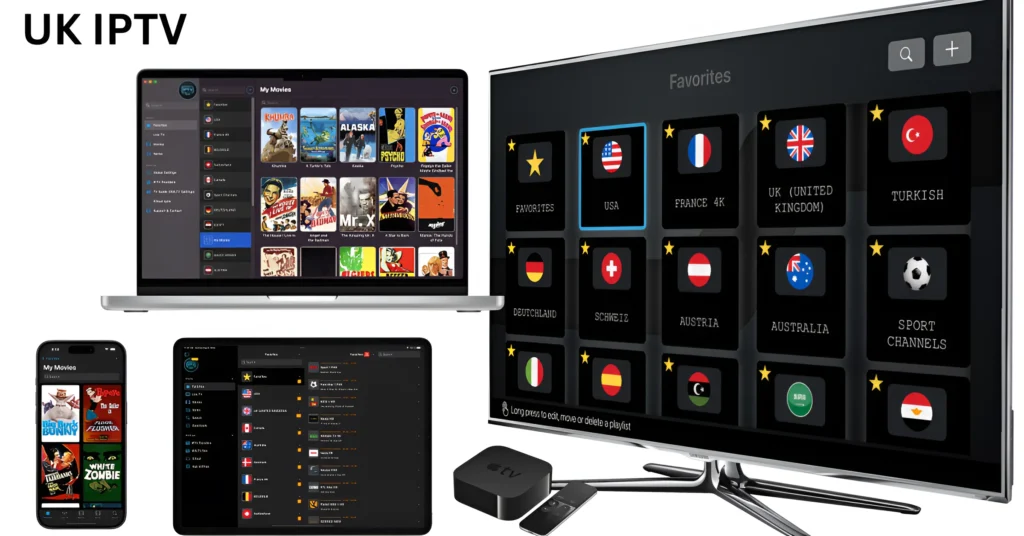
Understanding IPTV Technology
Internet Protocol Television, commonly referred to as IPTV, is transforming the way people consume television content. Instead of relying on traditional satellite dishes or cable connections, IPTV delivers live TV, sports, and on-demand content through the internet. This shift allows for greater flexibility, faster performance, and a more personalized viewing experience.
Fast Channel Switching & Low Latency IPTV for Live TV and Sports is possible because IPTV sends content in small data packets. These packets travel efficiently across networks, allowing channels to load quickly and streams to stay smooth. As internet infrastructure improves globally, IPTV continues to outperform older broadcasting methods.
What IPTV Means in Simple Terms
In simple terms, IPTV is television streamed over an internet connection. When a user selects a channel, the system requests that specific stream rather than broadcasting all channels at once. This targeted delivery is what enables faster channel switching and reduced delays.
Unlike traditional TV, IPTV allows viewers to pause live TV, rewind shows, or switch devices without interruption. These features make IPTV not only faster but also more convenient.
How IPTV Differs from Cable and Satellite
Cable and satellite TV broadcast signals continuously, whether or not the viewer is watching a specific channel. IPTV UK works differently. It delivers only the content the viewer selects. As a result, IPTV reduces unnecessary data usage and improves efficiency.
Another major difference is adaptability. IPTV adjusts stream quality based on internet speed, ensuring consistent playback. This adaptability plays a key role in maintaining low latency and fast channel switching for live TV and sports.
Why Fast Channel Switching Matters
Fast channel switching is more than a technical feature—it directly affects how viewers feel about a service. Slow switching creates frustration, while instant switching feels modern and responsive.
In Fast Channel Switching & Low Latency uk sports IPTV for Live TV and Sports, speed becomes critical because viewers frequently move between channels, especially during live events.
User Experience and Viewer Satisfaction
Viewers expect immediate results when pressing a button. If a channel takes several seconds to load, it breaks immersion. Fast channel switching creates a smooth flow, allowing users to browse confidently and comfortably.
Additionally, faster switching reduces app crashes and buffering issues. This improves trust in the service and encourages long-term use.
Impact on Sports and Live Events
Sports fans are especially sensitive to delays. A few seconds can mean missing a goal, a knockout punch, or a race finish. Fast switching allows fans to move between matches without losing key moments.
Psychological Effect of Delays
Delays create a sense of being “behind.” When viewers hear celebrations before seeing the action, excitement fades. Low latency fhd iptv uk eliminates this issue, keeping emotions aligned with real-time events.
What Is Low Latency IPTV
Latency refers to the delay between a live event and when it appears on a viewer’s screen. In IPTV, this delay can vary depending on technology, servers, and network quality.
The goal of Fast Channel Switching & Low Latency IPTV for Live TV and Sports is to reduce this latency as much as possible.
Defining Latency in Streaming
Latency occurs during encoding, transmission, and decoding of video streams. Each step adds a small delay. British IPTV systems optimized for low latency reduce these steps or process them more efficiently.
Lower latency means viewers see events almost as they happen. This is especially important for live sports, news, and interactive broadcasts.
Acceptable Latency Benchmarks
0–3 seconds: Near real-time viewing
3–6 seconds: Good performance
7+ seconds: Noticeable delay
Modern cheap iptv subscription platforms strive to stay within the first two categories to remain competitive.
Core Technologies Behind Fast Channel Switching
The performance of IPTV depends heavily on the technologies running behind the scenes. These systems work together to ensure smooth playback and quick response times.
Content Delivery Networks (CDNs)
CDNs distribute content across multiple servers worldwide. When a viewer selects a channel, the system connects to the nearest server instead of a distant central one. This shortens data travel time and reduces latency.
By using CDNs, IPTV providers ensure consistent speed even during peak viewing hours.
Adaptive Bitrate Streaming
Adaptive bitrate streaming uses network conditions to instantly modify video quality. If the connection weakens, the stream lowers quality slightly instead of buffering.
This technology keeps streams stable and supports fast channel switching without interruptions.
Role of Video Compression
Advanced codecs such as H.264 and H.265 compress video efficiently. Smaller file sizes load faster, making channel switching quicker while maintaining high picture quality.
IPTV for Live TV Performance
Live TV remains one of the biggest strengths of IPTV. From news to entertainment, 4k iptv subscription uk delivers consistent performance when optimized correctly.
News, Entertainment, and Reality Shows
Live broadcasts require stability. IPTV platforms designed for low latency ensure that news updates and live shows stream smoothly without freezing.
Fast channel switching allows viewers to jump between channels during breaking news events, improving engagement and awareness.
EPG Optimization and Channel Indexing
An Electronic Program Guide (EPG) organizes channels and schedules. When optimized, it reduces load time and helps channels open instantly.
Efficient indexing also allows IPTV apps to remember recent channels, speeding up switching even further.
IPTV for Sports Streaming
Sports streaming is the most demanding use case for IPTV technology. Unlike movies or on-demand content, live sports require real-time delivery, precise synchronization, and uninterrupted playback. Any delay, buffering, or channel-switching lag can significantly reduce viewer satisfaction.
Fast Channel Switching & Low Latency IPTV packages for Live TV and Sports is particularly important for sports fans who follow multiple matches, leagues, or tournaments at the same time. IPTV platforms that prioritize performance can meet these expectations consistently.
Real-Time Sports Viewing Needs
Live sports viewers expect to see the action as it happens. Whether it is a football goal, a cricket boundary, or a last-second basketball shot, timing is everything. Even a short delay of a few seconds can spoil the excitement, especially when fans receive notifications or hear reactions before seeing the moment on screen.
Low latency UK IPTV systems reduce the delay between the live event and the broadcast stream. This is achieved by using faster encoding methods, optimized content delivery networks, and shorter buffer times. As a result, viewers remain closely synchronized with real-world events.
Fast channel switching also plays a major role during sports broadcasts. Fans often move between channels to follow different matches or check highlights. When switching is instant, they stay engaged and informed without missing critical moments.
Syncing Commentary with Live Action
Audio-video synchronization is crucial for sports viewing. Commentary that lags behind the video—or arrives too early—creates confusion and frustration. Low latency IPTV ensures that commentary, crowd noise, and visuals are delivered together in real time.
Advanced IPTV systems process audio and video streams simultaneously, reducing desynchronization. This synchronized delivery enhances immersion and preserves the emotional impact of live sports.
Internet Requirements for Low Latency IPTV
While IPTV technology is powerful, its performance depends heavily on the quality of the internet connection. Many users assume that higher speed automatically means better IPTV performance. However, this is not always the case.
Bandwidth vs Stability
Bandwidth refers to how much data your internet connection can handle, while stability refers to how consistently that data is delivered. Stability is frequently more crucial for IPTV than raw speed.
For a 9 month IPTV subscription for live TV and sports, a steady 25 Mbps connection can provide superior Fast Channel Switching & Low Latency than an erratic 100 Mbps connection. Packet loss, jitter, and sudden drops in speed can increase buffering and latency.
Consistent connections ensure smooth playback, quick channel switching, and minimal delays during live events.
Wired vs Wireless Connections
Wireless connections are convenient but can introduce interference and signal loss. Walls, distance, and other devices can reduce Wi-Fi performance.
Wired Ethernet connections provide lower latency, higher reliability, and more consistent speeds. For users who prioritize live sports and fast channel switching, a wired connection is strongly recommended.
Devices That Support Fast IPTV Switching
The device used to access IPTV services significantly affects performance. Even the best IPTV service can feel slow if the device lacks processing power or optimization.
Smart TVs
Modern Smart TVs are designed with streaming in mind. Many feature powerful processors, optimized operating systems, and dedicated IPTV applications.
When paired with a reliable internet connection, Smart TVs can handle fast channel switching and low latency streaming effectively. Regular software updates also improve compatibility and performance over time.
Android Boxes, Firestick, and MAG Devices
Dedicated streaming devices are popular among Premium IPTV users because they are optimized specifically for media playback.
Android TV boxes offer flexibility, customization, and access to multiple IPTV apps.
Amazon Firestick devices are compact, affordable, and well-optimized for streaming.
MAG boxes are purpose-built IPTV devices known for stability, speed, and simplicity.
These devices often outperform general-purpose hardware when it comes to Fast Channel Switching & Low Latency IPTV for Live TV and Sports.
Server Quality and Its Role in IPTV Speed
Behind every IPTV subscribe service is a server infrastructure that determines speed, reliability, and scalability. High-quality servers are essential for maintaining low latency and fast response times.
Load Balancing and Redundancy
Load balancing distributes user traffic evenly across multiple servers. This prevents any single server from becoming overloaded during peak viewing hours, such as major sports events.
Redundancy ensures that if one server fails, another takes over immediately. This minimizes downtime and keeps streams running smoothly.
Together, these techniques help IPTV UK providers deliver consistent performance regardless of audience size.
Server Location and Ping Time
Server location has a direct impact on latency. The farther data has to travel, the longer it takes to reach the viewer.
IPTV providers with geographically distributed servers can offer faster response times. When users connect to a nearby server, ping time decreases, resulting in quicker channel switching and lower latency.
Common Problems That Increase IPTV Latency
Despite advancements in IPTV technology, users may still encounter performance issues. Understanding common problems helps identify solutions quickly.
Buffering, Freezing, and Lag
Buffering and freezing usually occur when the stream cannot load data fast enough. This can be caused by unstable internet connections, insufficient device resources, or poor server performance.
Lag, especially during live sports, often indicates high latency. Optimized IPTV systems reduce buffer size and use adaptive streaming to minimize these issues.
Overloaded Servers
IPTV subscription uk providers may overcrowd their servers to reduce costs. This leads to slow performance, dropped connections, and increased latency.
Reputable providers invest in scalable infrastructure to ensure consistent performance even during high-demand events.
How to Optimize IPTV for Faster Performance
Users can take several steps to improve IPTV performance without changing providers.
App Settings and Configuration
Most IPTV apps include performance-related settings. Adjusting these can significantly improve speed and responsiveness.
Recommended optimizations include:
Enabling hardware acceleration
Reducing buffer size for live streams
Selecting efficient video codecs
These changes reduce processing delays and support fast channel switching.
Router and Network Tweaks
Network optimization plays a crucial role in IPTV performance. Simple steps include:
Updating router firmware
Enabling Quality of Service (QoS) for streaming devices
Limiting background downloads
These adjustments ensure best iptv uk traffic receives priority, reducing latency and buffering.
Security, Reliability, and Trust in IPTV
Performance alone is not enough. Security, legality, and reliability are equally important for long-term IPTV use.
Legal and Ethical Considerations
Using legitimate IPTV UK services ensures compliance with broadcasting regulations and content rights. Legal platforms are more likely to offer stable service, regular updates, and customer support.
They also reduce the risk of service shutdowns or security breaches.
Choosing Reputable IPTV Providers
A trustworthy IPTV united kingdom provider focuses on quality rather than quantity. Key indicators of reliability include:
Transparent pricing and policies
High uptime guarantees
Responsive customer support
Fast channel switching and low latency IPTV for live TV and sports are often provided by reputable suppliers without sacrificing dependability.
Frequently Asked Questions (FAQs)
1. Why is IPTV latency noticeable during sports?
Sports broadcasts require real-time delivery, making even small delays noticeable.
2. Does using a VPN increase IPTV latency?
In some cases, yes. VPNs can add extra routing steps that increase delay.
3. Can device overheating affect IPTV performance?
Yes. Overheating can slow processing and increase lag.
4. Is buffering always caused by slow internet?
No. It can also result from poor servers or app configuration.
5. Are dedicated IPTV devices better than Smart TVs?
Often yes, because they are optimized specifically for streaming.
6. How often should IPTV apps be updated?
Regular updates ensure better compatibility, security, and performance.
Conclusion
Fast Channel Switching & Low Latency IPTV reseller for Live TV and Sports defines the modern viewing experience. For sports fans and live TV enthusiasts, performance is not optional—it is essential. With the right combination of reliable servers, optimized devices, stable internet connections, and trusted providers, IPTV free trial delivers near real-time entertainment without interruption.
As IPTV technology continues to evolve, viewers can expect even faster switching, lower latency, and higher reliability, making IPTV the preferred choice for live TV and sports streaming worldwide.
For More Info……….